Can Psychedelics Help Depression? What to Know Before You Start
Blog post description.Thinking about using psychedelics for depression? Learn what research says, the risks, and why preparation and integration matter most for real healing.
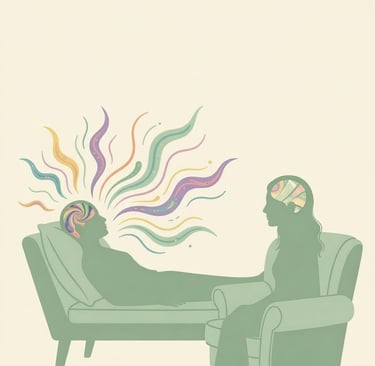
Can Psychedelics Help Depression? What to Know Before You Start
If you’ve been struggling with depression, you may have come across stories of people using psychedelics to feel better.
You might be wondering:
Can this actually help me?
Is it safe?
Where do I even start?
You’re not alone in asking these questions.
There’s a growing wave of research around psychedelics like psilocybin. Some of the results are promising.
But there’s also a lot that people don’t talk about.
This guide will walk you through what we actually know, in a clear and grounded way.
What the Research Actually Shows
Research is moving quickly in this area.
Studies have found that psilocybin may:
reduce depressive symptoms
work relatively quickly
create changes that last weeks or even months
In some cases, people experienced improvements that lasted up to 6–12 months after just one or two sessions .
That’s part of why there’s so much attention right now.
But this doesn’t tell the whole story.
Why Psychedelics Feel So Different
Most antidepressants work by reducing intensity.
Psychedelics tend to do the opposite.
They often:
increase emotional access
bring up memories
shift how you see yourself
Instead of numbing, they can open things up.
That can feel:
relieving
meaningful
or overwhelming
Sometimes all at once.
Why People With Depression Are Drawn to This
If you’re here, this might sound familiar.
A lot of people exploring psychedelics feel:
stuck in patterns
emotionally numb
frustrated with therapy or medication
Research shows many participants had already tried multiple treatments without success .
At a certain point, people start looking for something deeper.
Something that actually shifts things.
What Most People Don’t Realize
This part is important.
Most people think:
“The psychedelic experience is what heals you.”
But that’s not really how it works.
The experience is only one piece.
What actually matters most is:
preparation
support
and what happens afterward
The Part No One Talks About
After the experience, people are often left with:
strong emotions
memories
insights
confusion
Many participants in research said they didn’t know what to do with what came up .
Some felt:
overwhelmed
unsure how to make sense of it
like they needed more support
This is where things either deepen…
or fade.
The Experience Isn’t Always “Positive”
There’s a lot of hype right now.
But real experiences vary.
Some people report:
connection
emotional release
clarity
Others report:
intense sadness
fear
reliving difficult memories
feeling overwhelmed
Both are part of the territory.
This doesn’t mean something went wrong.
It means something real came up.
Why Preparation Matters More Than You Think
In research settings, people don’t just take psychedelics.
They prepare.
That can include:
building trust with a therapist
understanding what might happen
setting intentions
learning how to handle difficult moments
Even with preparation, some participants still didn’t feel fully ready.
Without preparation, people are more likely to:
resist the experience
feel out of control
struggle with what comes up
Letting Go Is Not Easy
You’ll often hear:
“Just trust and let go.”
But for many people with depression, that’s actually hard.
Especially if you’ve:
experienced trauma
learned to stay in control
felt unsafe in the past
Research shows that difficulty letting go can make experiences more challenging .
This is not a personal failure.
It’s something that needs support.
Integration Is Where Change Happens
This is the most important part.
After the experience, the real work begins.
Integration means:
making sense of what happened
connecting it to your life
turning insight into change
Without integration:
insights fade
confusion lingers
nothing really shifts
With integration:
patterns become clearer
emotions get processed
change becomes possible
One Session Is Not a Cure
It’s easy to think:
“This could fix everything.”
But most people in studies didn’t experience it that way.
Many felt:
one session wasn’t enough
changes faded
they needed ongoing support
Some even tried repeating the experience on their own and found it didn’t help without guidance .
This is a process.
Not a single moment.
Is It Safe?
In controlled settings, psychedelics are generally well tolerated .
But there are risks.
These can include:
anxiety or panic
resurfacing trauma
emotional overwhelm
worsening symptoms in some cases
This is why support matters.
Not just during the experience.
But before and after.
Set and Setting Matter More Than the Substance
Two people can take the same substance…
and have completely different experiences.
Why?
Because of:
mindset
environment
support
Research consistently shows these factors shape outcomes .
Feeling safe, supported, and prepared makes a real difference.
A More Grounded Way to Approach This
If you’re considering this path, slow it down.
A more stable approach looks like:
Before:
understanding your intentions
preparing emotionally
knowing what might come up
After:
processing the experience
making sense of it
integrating it into your life
This is where therapy can help.
Final Thoughts
Psychedelics are getting attention for a reason.
Some people experience real shifts.
But the full picture is more complex.
These experiences can open something.
But what you do with that opening is what matters.
If You’re Exploring This
If you’re thinking about using psychedelics for depression and want to approach it in a more grounded way:
You don’t have to figure it out alone.
Support can help you:
prepare
navigate the experience
and make sense of what comes up
psychedelicassistedtherapy@proton.me
© 2026. All rights reserved.
Important: This practice does not provide psychedelic substances.
Services are limited to psychotherapy, preparation, journey resources and integration support related to psychedelic experiences.
This website does not provide emergency services. If you are in crisis or need immediate help,
call 911 or contact Talk Suicide Canada at 1-833-456-4566.